
Phone No
+91 9650510275
orthodrhimanshugupta@gmail.com
Location
Plot No. 15/16 Nyay Khand- 1, Ghaziabad.
+91 9650510275
orthodrhimanshugupta@gmail.com
Plot No. 15/16 Nyay Khand- 1, Ghaziabad.
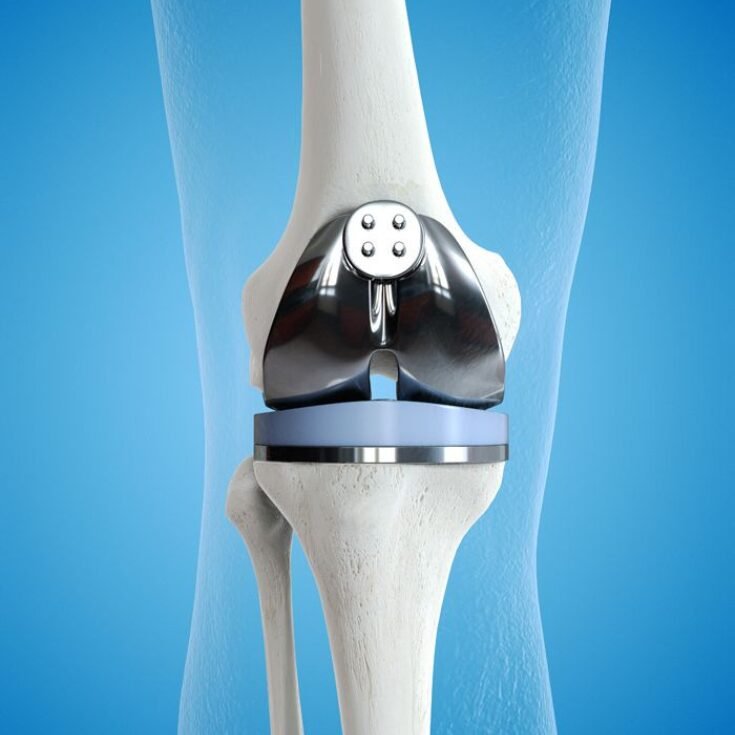
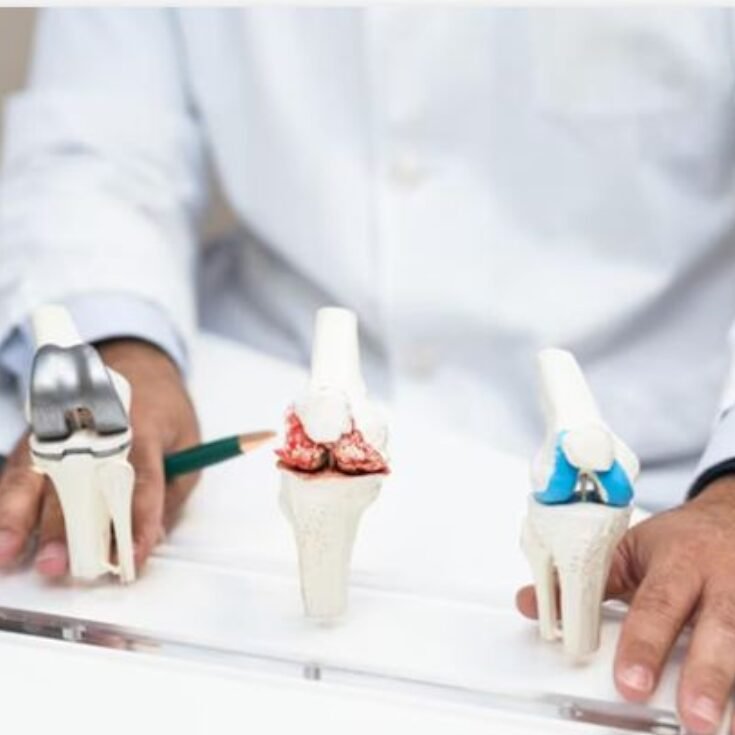
Knee pain from arthritis or joint damage can limit daily movement and quality of life. When non-surgical treatments fail, titanium knee replacement is often recommended. Patients usually want to know what a titanium knee replacement is, how it works, why titanium is used, the cost, recovery time, and who needs it.
Titanium knee replacement uses titanium or titanium alloy implants to replace damaged knee surfaces. Titanium is preferred for its strength, biocompatibility, and long-lasting performance in advanced knee replacement surgery.
This guide covers what a titanium knee replacement is, its types, benefits, recovery, cost in India, and ideal candidates in a simple way.
Titanium knee replacement is a surgical procedure in which damaged compartments of the knee joint are replaced with a titanium knee prosthesis. The implant restores smooth joint movement, reduces pain, and improves stability.
● Integrates well with bone
● Has high strength with low weight
● Causes minimal allergic reactions
● Offers excellent long-term durability
Because of these properties, titanium knee replacement is commonly recommended for both younger and elderly patients, depending on joint condition and activity level.
The titanium knee replacement procedure is performed with precision to restore knee movement and relieve pain caused by joint damage.
● Removal of damaged cartilage and worn-out bone from the knee joint
● Reshaping the knee surfaces to ensure proper implant fit
● Fixation of the titanium knee prosthesis securely to the bone
● Placement of a smooth bearing surface to allow pain-free movement
● Careful checking of joint alignment, stability, and range of motion
This structured process helps restore knee function while maintaining proper load distribution and long-term joint stability.
There are different types of titanium knee replacement, selected based on joint damage and patient needs.
● The entire knee joint is replaced
● Recommended for advanced arthritis
● Provides maximum pain relief and durability
● Only the damaged portion of the knee is replaced
● Preserves healthy bone and ligaments
● Faster recovery for selected patients
● Designed using patient-specific imaging
● Improves fit and joint mechanics
● Useful for complex knee anatomy
Each type of titanium knee replacement offers specific benefits depending on the condition of the knee.
Most titanium knee replacement implants are made from medical-grade titanium alloy, rather than pure titanium, to improve strength and performance.
● Stronger and more durable than pure titanium
● Highly resistant to wear and metal fatigue
● Excellent bone-bonding and biocompatibility properties
● Lightweight design that reduces stress on surrounding joints
Titanium alloy implants provide better stability, longevity, and reliable performance in advanced knee replacement surgery
Titanium knee replacement offers several advantages for patients seeking durable and long-lasting knee joint solutions.
● Excellent biocompatibility, allowing strong bone integration
● Long implant lifespan with minimal wear
● Lightweight structure that supports natural joint movement
● Lower risk of metal allergy or inflammatory reactions
● Improved knee stability, flexibility, and walking comfort
These benefits make titanium knee replacement a trusted option for long-term knee health and improved quality of life.
Titanium knee replacement differs from other knee implant materials due to its unique physical and biological properties. Compared to traditional implants, titanium offers better compatibility with the human body and improved long-term performance.
● Titanium vs cobalt-chromium: Titanium knee replacement implants are lighter and more bone-friendly, reducing stress on surrounding tissues
● Titanium vs stainless steel: Titanium provides superior corrosion resistance and durability inside the body
● Better bone integration: Titanium implants bond more effectively with bone tissue, improving stability over time
Because of these benefits, titanium knee replacement is often recommended for patients who need durable, biologically compatible knee implants.
The titanium knee replacement cost in India can vary based on multiple clinical and hospital-related factors.
● ₹2.5 lakh to ₹5.5 lakh per knee
● Type and design of the titanium knee prosthesis
● Partial versus total titanium knee replacement
● Hospital infrastructure and technology used
● Surgeon’s experience and expertise
● Length of hospital stay and rehabilitation requirements
Although the initial titanium knee replacement cost may be higher, it is considered cost-effective due to the implant’s long lifespan and durability.
Recovery after titanium knee replacement surgery varies depending on age, overall health, and commitment to rehabilitation.
● 1–2 weeks: Pain and swelling gradually reduce
● 3–6 weeks: Walking improves with a walker or support
● 6–8 weeks: Increased knee strength, balance, and confidence
● Around 3 months: Return to most daily and routine activities
Structured physiotherapy plays a crucial role in recovery after titanium knee replacement, helping restore flexibility, muscle strength, and smooth knee movement for long-term success.
Titanium knee replacement is recommended for patients with advanced knee joint damage that significantly affects movement and quality of life. It is especially useful when long-term implant strength and compatibility with bone are important considerations.
● Patients with severe knee arthritis, causing constant pain
● Individuals with chronic knee pain that limits daily activities
● Patients who have not improved with medications, injections, or physiotherapy
● Those with knee joint deformity or stiffness
● Active individuals who need a durable and long-lasting knee implant
A detailed orthopedic evaluation helps determine whether titanium knee replacement is the most suitable option based on joint condition and lifestyle needs.
There is no single “best” knee replacement for everyone, as the choice depends on individual
clinical factors and expectations.
● Age and overall activity level
● Severity and pattern of knee joint damage
● Bone quality and alignment
● Lifestyle, work demands, and long-term mobility goals
In many cases, titanium knee replacement is preferred when long-term durability, biological compatibility, and stable bone integration are key priorities.
Medical-grade titanium alloy is used because it offers high strength, corrosion resistance, and excellent bone compatibility for long-term knee replacement success.
The best knee replacement depends on joint damage, age, activity level, and surgeon assessment, with titanium knee replacement often chosen for durability.
Customized or robotic knee replacements using premium implants, including titanium knee prostheses, are usually the most expensive options.
A titanium knee replacement can last 20–25 years or longer with proper care, weight management, and regular follow-up.
Titanium implants may cost more initially and can be slightly less scratch-resistant, but overall clinical outcomes remain highly favorable.
Titanium knee replacement is a reliable and modern solution for patients suffering from severe knee arthritis, chronic pain, or joint damage that limits daily activities. With its strength, biocompatibility, and long lifespan, titanium knee replacement offers lasting pain relief and improved mobility.
When selected after proper evaluation and combined with structured rehabilitation, titanium knee replacement surgery can restore knee function, support an active lifestyle, and significantly improve long-term quality of life.

EXCELLENTTrustindex verifies that the original source of the review is Google. Very satisfied with my treatment for knee pain. Its very painful for me to walk. But I am under treatment with dr. Himanshu Gupta and now I am perfectly fine. No pain, and now I can walk properly without any pain. Dr. Himanshu Gupta is very well trained doctor I've ever seenPosted on GoogleTrustindex verifies that the original source of the review is Google. I consulted Dr Himanshu Gupta for the Mother's knee pain and I am extremely grateful for the excellent care I received. Dr. Gupta was highly professional, knowledgeable, and made me feel at ease throughout the process. The hospital staff was attentive, ensuring a smooth and comfortable experience. It had a clean and friendly environment.Posted on GoogleTrustindex verifies that the original source of the review is Google. Dr. Gupta’s diagnosis has always been spot-on, and his approach to treatment was both thorough and reassuring. He took the time to patiently explain every step of the process, answering all our questions with clarity and empathy—something that made my mother feel confident and cared for throughout her recovery. Highly recommend Dr. Himanshu Gupta to anyone looking for an experienced and genuinely caring orthopedic specialist.Posted on GoogleTrustindex verifies that the original source of the review is Google. My mother operated here for her knee replacement. I totally recommend to visit here for ortho related problems. The results are amazing Best experience ever. Very satisfied with the robotic knee surgery. Staff is very professional and helpful. Dr. Himanshu Gupta is highly skilled in Robotic surgery. And so supportive during my mother's treatmentPosted on GoogleTrustindex verifies that the original source of the review is Google. Dr. Himanshu Gupta is an amazing orthopaedic. He treated my ACL problem with great care and expertise. His professionalism, explanation of treatment, and follow-up care were top-notch. Highly recommend for anyone needing orthopaedic care. My Surgery was also went smooth and successful Hospital's Pre & Post Care was very excellent. Staff was also so helpful during my stay.Posted on GoogleTrustindex verifies that the original source of the review is Google. I have expressed high satisfaction with Dr. Himanshu Gupta's friendliness, treatment, and explanation of health issues.Posted on GoogleTrustindex verifies that the original source of the review is Google. Dr. Himashu Gupta , Amicare Hospital, Indirapuram is the one of the best Doctor of Orthopaedic and also with loveble baheviour to every patient with care treatments, All the decoram of this Hospital have very fine and reasonable to treatment. All Staff of Hospital is too cooperative with good human behaviour.Posted on GoogleTrustindex verifies that the original source of the review is Google. Dr.Himanshu Gupta is very knowledgeable Doctor . My Knee surgery was successfully .Posted on GoogleTrustindex verifies that the original source of the review is Google. Good check up and doctor checkup is technique is perfectPosted on GoogleTrustindex verifies that the original source of the review is Google. Dr. Himanshu has deep knowledge of his subject. He is very caring and explains the diagnosis and treatment to the patient. My wife was under his treatment several times and got quick relief. Amicare hospital has good facilities and gives quick service under one roof.

Dr. Himanshu Gupta is a highly trusted and skilled orthopedic specialist, known for delivering expert care and personalized treatment.
+91 9650510275
orthodrhimanshugupta@gmail.com
Plot No. 15/16 Nyay Khand- 1, Near Indirapuram Public School, Indirapuram Ghaziabad- 201014 India
Privacy Policy | Term and Conditions | Sitemap
Copyright 2025 © All Right Reserved Design
Copyright 2026 © All Right Reserved Design